Guides
Upper Midwest cold-climate bakery operations, seasonal demand and delivery
Bakery business operations in the Upper Midwest must manage Minnesota winters, dough temperature and proofing, delivery routes, and wholesale demand swings.
What to take away
- Bakery business operations in the Upper Midwest must treat Minnesota winter conditions as a production variable, not a backdrop.
- Cold rooms slow yeast, so dough temperature and proofing adjustments start with warmer water and longer floor time.
- Delivery route planning in Minnesota winters needs vehicle checks, insulated totes and a storm-day sequence.
- Seasonal demand swings for wholesale accounts peak in November and December, then drop hard in January.
- Utility and energy cost effects on winter baking show up as higher gas for proofing and higher electric for lights and mixers.
How Upper Midwest winters change dough temperature and proofing
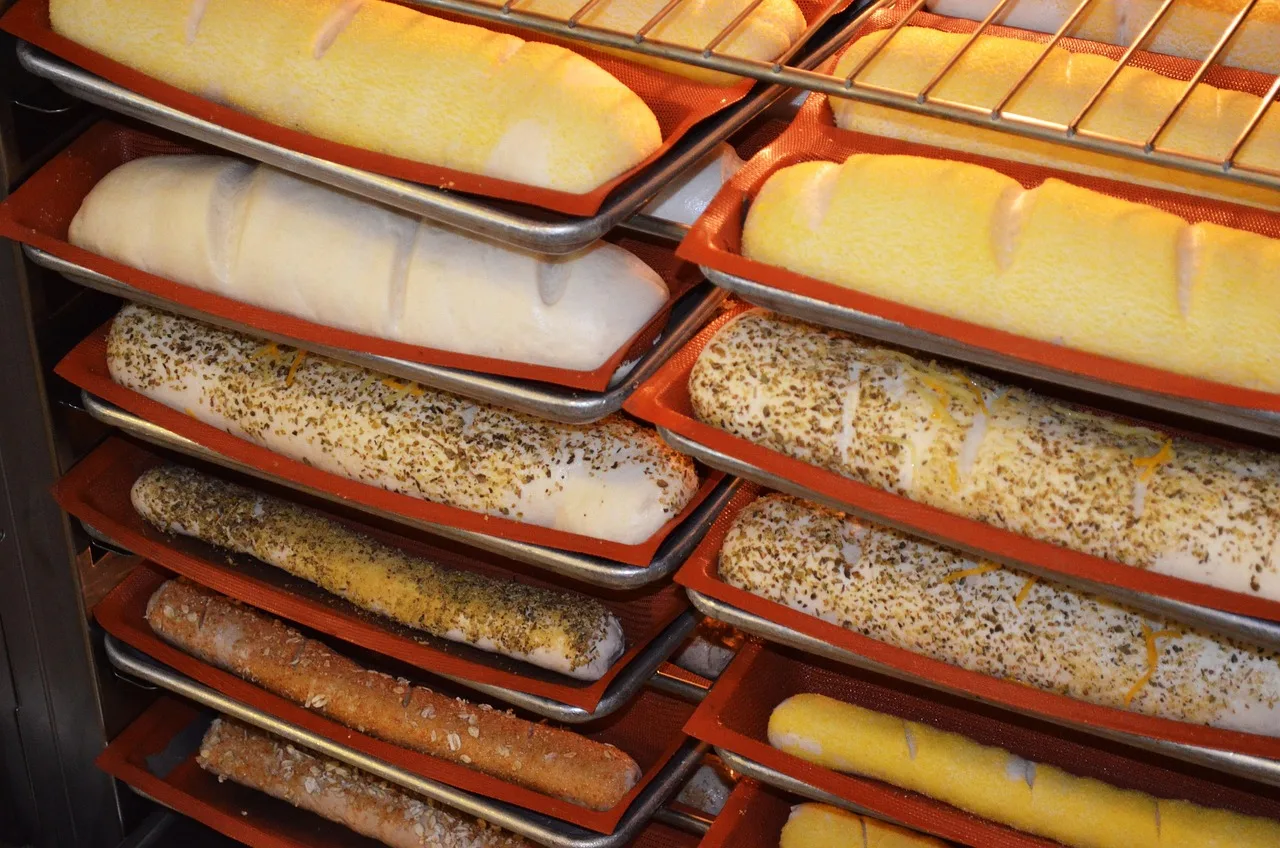
Minnesota winter conditions push room temperatures toward 60 to 65 F in older wholesale shops. Yeast slows below 70 F, so a dough that proofed in 90 minutes in October can take two hours in January. That gap lands on your oven schedule, your labor and your truck times.
Dough temperature control starts with water. If your tap water runs at 45 F in a Minnesota winter, a straight mix can drop final dough temperature by 5 to 8 F. Use a calculated water temperature rather than a feel test.
For a desired dough temperature of 78 F, subtract flour temperature, room temperature and friction factor from three times the target. The result is your water temperature.
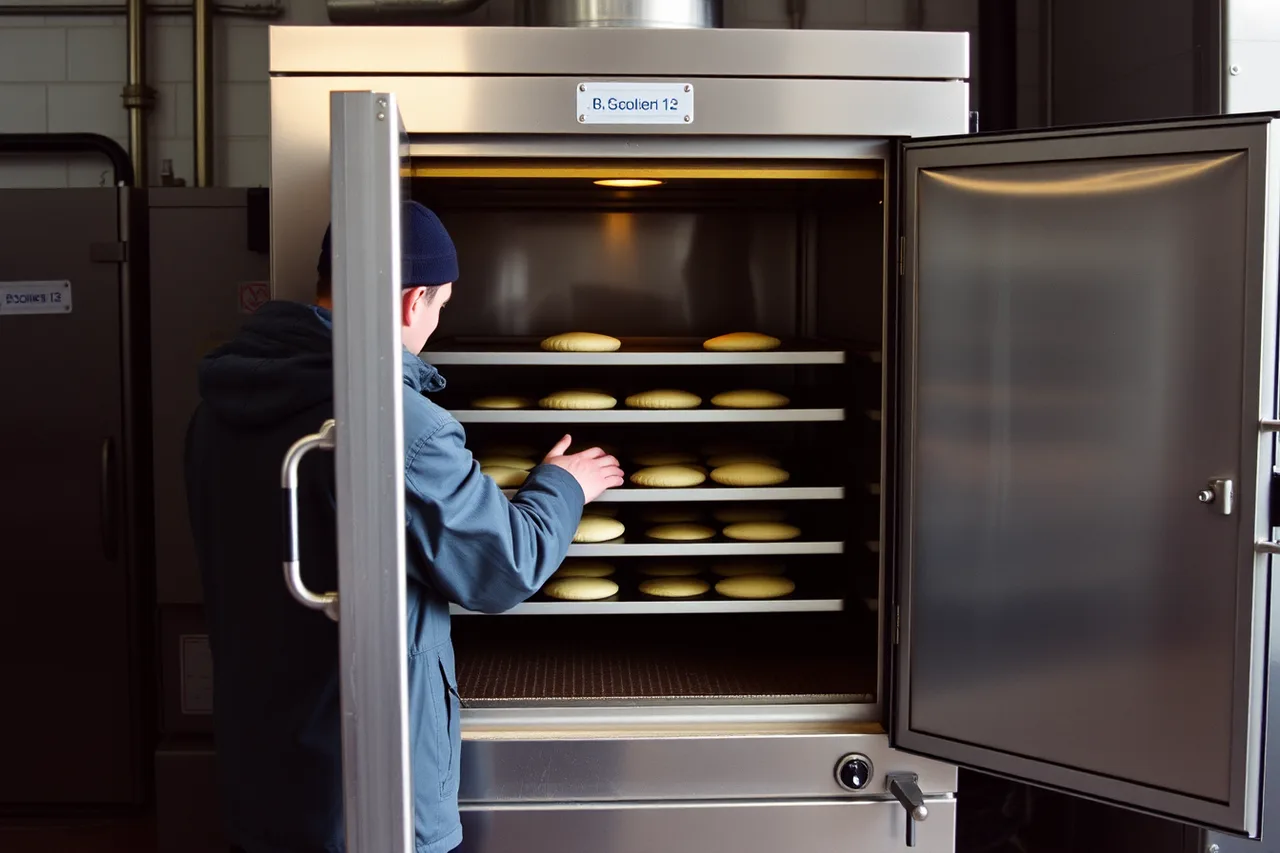
Cold climate proofing also changes the proof box. A box that holds 85 F and 80 percent humidity in summer may struggle to reach 80 F when the make-up air is 10 F. Check the door gasket, the steam valve and the drain.
A cold draft across the proof box door is enough to skin a dough and stall a batch.
NOAA climate data for the region shows the scale of the problem: Minneapolis averages January highs near 24 F, and cold snaps push overnight lows well below zero. For bakery business operations, that means the building envelope matters as much as the mixer.
Climate | National Oceanic and Atmospheric Administration is a useful reference for regional norms and trends.
Adjusting formulas for cold-climate production rooms
Raising water temperature is the first lever. Raising it too far is a mistake. Water above 120 F can shock yeast and give you a dense, gassy dough. Aim for a final dough temperature of 76 to 80 F for lean doughs and 74 to 78 F for enriched doughs.
Second, extend bulk fermentation. A 20 to 30 percent longer bulk gives the yeast time to work at lower room temperature. If you normally bulk for 60 minutes, plan for 75 to 90 minutes in January. Watch the dough, not the clock.
Third, adjust yeast. A small increase, often 0.25 to 0.5 percent of flour weight, can offset a cold room. Do not raise yeast and water temperature at the same time without a reason. Pick one change, then measure.
Fourth, protect the dough between stages. A covered tub in a cold room still loses heat at the surface. Stack tubs off the floor, away from exterior walls and loading doors. A 10 F difference between the middle and the edge of a tub is common in winter.
Your bakery inventory planning should account for these slower turns. If dough sits longer, your flour, yeast and packaging usage shifts, and your par levels should follow.
A worked example: adjusting a lean dough for January
Start with a straight dough at 78 F final temperature in October. In January, your room is 62 F, flour is 65 F and water is 48 F. Friction factor is 10 F.
Adjusting a lean dough
- Target final dough temperature78 F.
- Multiply by three234.
- Subtract flour (65), room (62) and friction (10)234 minus 137 equals 97.
- Set water temperature at 97 F.
- Extend bulk fermentation by 25 percent and check the dough at 45 minutes.
That single change, water at 97 F instead of 48 F, keeps the dough on schedule without adding yeast. If the dough still runs cold, raise the room temperature before you raise the water again.
Delivery routes and vehicle planning in Minnesota winters
Winter bakery delivery routes are a logistics problem before they are a driving problem. Snow and ice reduce road speed, and a route that takes four hours in July can take six in a January storm. Build your schedule around that range, not the summer number.
Vehicle readiness matters. Check batteries, block heaters, tire tread and washer fluid before the first freeze. A dead battery at 5 a.m. costs you every stop on the route. Keep an insulated tote or a heated cargo area for proofed dough and finished product that cannot freeze.
Route sequencing should change with the weather. Put the farthest stops first when the forecast is clear, and the closest stops first when a storm is moving in. This keeps you from being stranded far from the shop with a full load.
Use weather resources for seasonal demand and delivery planning before you dispatch. Weather | National Oceanic and Atmospheric Administration gives forecasts and warnings that help you decide whether to run, shift or hold a route.
NOAA tools and resources for weather-related bakery logistics can also support a simple decision rule: if a winter storm warning is active, cut the route to essential accounts and call the rest.
Your bakery inventory plan should include a storm-day kit: extra totes, a phone list, a fuel card and a written alternate route. Drivers should know the plan before the storm, not during it.
Seasonal demand swings for wholesale accounts
Seasonal bakery demand in the Upper Midwest runs on a predictable curve. Wholesale accounts order more in November and December for holidays, parties and gift boxes. January brings a sharp drop as schools return and consumers tighten spending after the holidays.
That swing changes production planning. In October, you should already be building ingredient stock for the holiday push. In January, you should be cutting back on perishable inputs and renegotiating standing orders with accounts that over-ordered in December.
Wholesale accounts also change their own hours in winter. Cafes and restaurants may open later or close earlier during bad weather, which shifts your delivery window. Ask each account for a winter contact and a winter receiving window before the season starts.
Your bakery inventory control should track holiday sell-through by account. If one account consistently returns or cancels in January, adjust its December allocation next year. That is a demand signal, not a service failure.
Checklist: preparing wholesale accounts for winter
- Confirm a winter receiving window and a backup contact for each account.
- Set holiday order cutoffs at least two weeks before the peak week.
- Review last January's returns and cancellations by account.
- Build a storm-day priority list of accounts that must be served.
- Agree on a freeze policy for dough and finished product left at the dock.
- Check that invoices and delivery notes survive wet weather.
- Schedule a January review to reset standing orders.
Energy and utility cost effects on winter baking
Winter raises two utility lines at once: natural gas for proofing and baking, and electricity for lights, mixers, refrigeration and ventilation. A cold building also loses heat faster, so the boiler or furnace works harder to hold 70 F in the production room.
Electricity data for bakery utility cost planning helps you see where you sit against regional averages. Electricity - U.S. Energy Information Administration (EIA) publishes rates and sales data by state and sector, which is useful when you compare a Minnesota winter bill with a summer one.
Consumption and efficiency data for bakery energy benchmarking can show whether your ovens, proofers and refrigeration are running in a normal range. Consumption & Efficiency - U.S. Energy Information Administration (EIA) covers end-use consumption, which helps you find the equipment that is costing you the most.
Simple fixes pay back fast in a cold climate. Seal loading dock doors, add strip curtains, insulate hot water lines and set proofers to the lowest temperature that still works. Do not heat the whole shop to fix a cold proof box. Heat the proof box.
Your best bakery suppliers can also help with winter costs. Ask about delivery minimums, lead times and whether they can hold stock for you through a storm. A supplier that delivers on time in January is worth more than one that is cheap in July.
Common questions
How much should I raise dough water temperature in a Minnesota winter?
Use a calculated water temperature, not a fixed number. For a 78 F target, a 62 F room, 65 F flour and a 10 F friction factor, water should be about 97 F. Adjust from there based on how the dough feels and proofs.
Should I add more yeast when the production room is cold?
Only after you have fixed water temperature and bulk time. A small increase of 0.25 to 0.5 percent of flour weight can help, but adding yeast and hot water together makes the dough unpredictable.
How do I plan delivery routes when a winter storm is coming?
Watch forecasts and warnings, then cut the route to essential accounts. Put the closest stops first when a storm is moving in, and keep a storm-day kit with totes, a phone list and an alternate route in every vehicle.
When do wholesale orders peak in the Upper Midwest?
November and December are the peak for holiday and party orders. January brings a sharp drop. Build ingredient stock in October and reset standing orders in January based on last year's sell-through.
What utility costs rise most in a winter bakery?
Natural gas for proofing and baking, and electricity for lighting, mixers and refrigeration. Sealing dock doors, adding strip curtains and insulating hot water lines are low-cost ways to cut both.
How can I enter new markets for bakery accounts in the Upper Midwest?
Start with accounts that already operate in winter, such as grocery stores, schools and offices with year-round hours. Use your winter reliability as a selling point, and review your markets for bakery options before you add routes.