Guides
A Sourdough Dough Formula for a US Farmers Market Weekend Bake
Sourdough dough formula farmers market sellers must know US labeling, jurisdiction, and record rules before a weekend bake. Missing one rule can stop the stall.
What to take away
- A sourdough dough formula for a US farmers market weekend bake uses 1000 g bread flour, 750 g water (75% hydration), 20 g salt, and 200 g starter (20%).
- A market seller also faces FDA labeling rules plus state and county cottage food limits.
- A compliant label carries product identity, net weight, ingredient list, allergen callouts, and business contact.
- The regulator you answer to is usually a state agriculture or health department, not the market manager alone.
- Missing a label or licensing rule can trigger a stop sale order and stall revocation for the season.
Who has jurisdiction at a US farmers market
The Food and Drug Administration sets national labeling standards, but most market loaves stay inside one state. State agriculture departments and county health agencies enforce those standards under their own food codes.
Your sourdough formula may be lawful under a cottage food permit if you sell direct and stay under the state's gross sales cap. Before you scale the weekend bake, check how US cottage food laws decide when a home bakery can sell dough. County inspectors can inspect your home kitchen or market stall with little notice.
The FDA Food Code is a model code that many states and counties adopt by reference. A local inspector may enforce that code at the market even if the state issued your cottage food permit. If your market sits on county property, the county health department may add an extra permit requirement.
Who Regulates Your Market Loaf
Do you sell direct to consumers only?
Cottage food permit may apply
Commercial kitchen license likely required
The weekend sourdough dough formula
A market formula starts with baker's percentage. Treat flour as 100%. For two 900 g loaves, weigh 1000 g bread flour, 750 g water, 20 g fine sea salt, and 200 g ripe starter.
| Ingredient | Baker's percentage | Weight for 1000 g flour |
|---|---|---|
| Bread flour | 100% | 1000 g |
| Water | 75% | 750 g |
| Fine sea salt | 2% | 20 g |
| Ripe starter, 100% hydration | 20% | 200 g |
Use a bread flour with 11.5% to 12.7% protein, such as King Arthur Bread Flour. Its bag lists 12.7% protein. Refresh a 100% hydration starter at 1:5:5 (starter:flour:water) 8 to 12 hours before mix. It should double and smell yeasty.
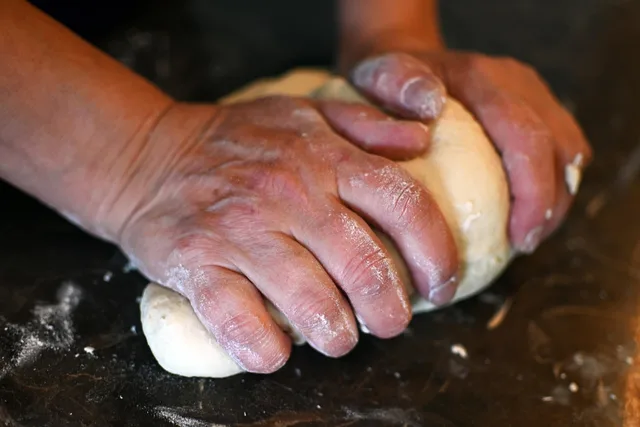
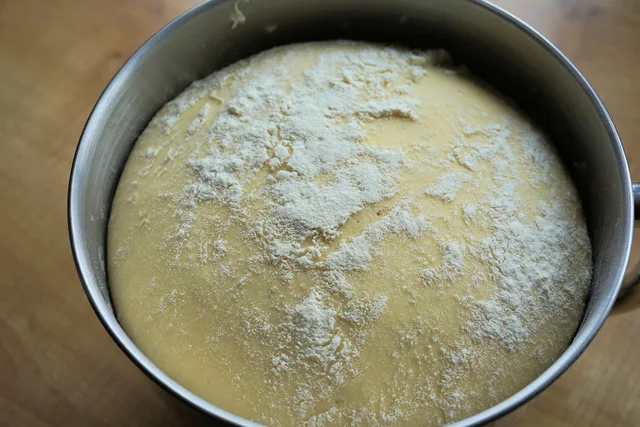
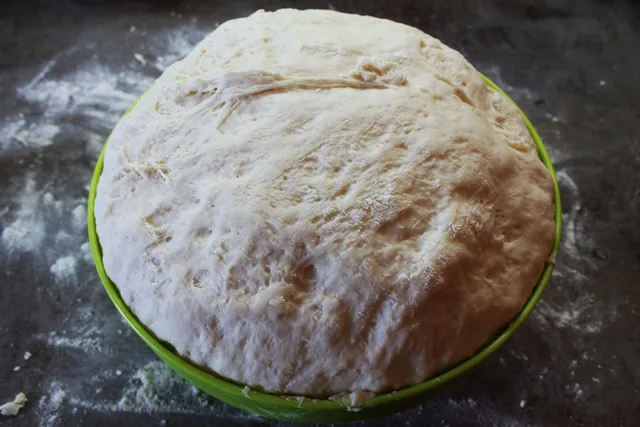
Mix at 78F. Autolyse flour and water 45 minutes. Add salt and starter, then mix 8 to 10 minutes in a spiral mixer or 15 minutes by hand. Bulk ferment 4 hours at 78F with stretch and folds at 30, 60, and 90 minutes. Divide, pre-shape, rest 30 minutes, then final shape.
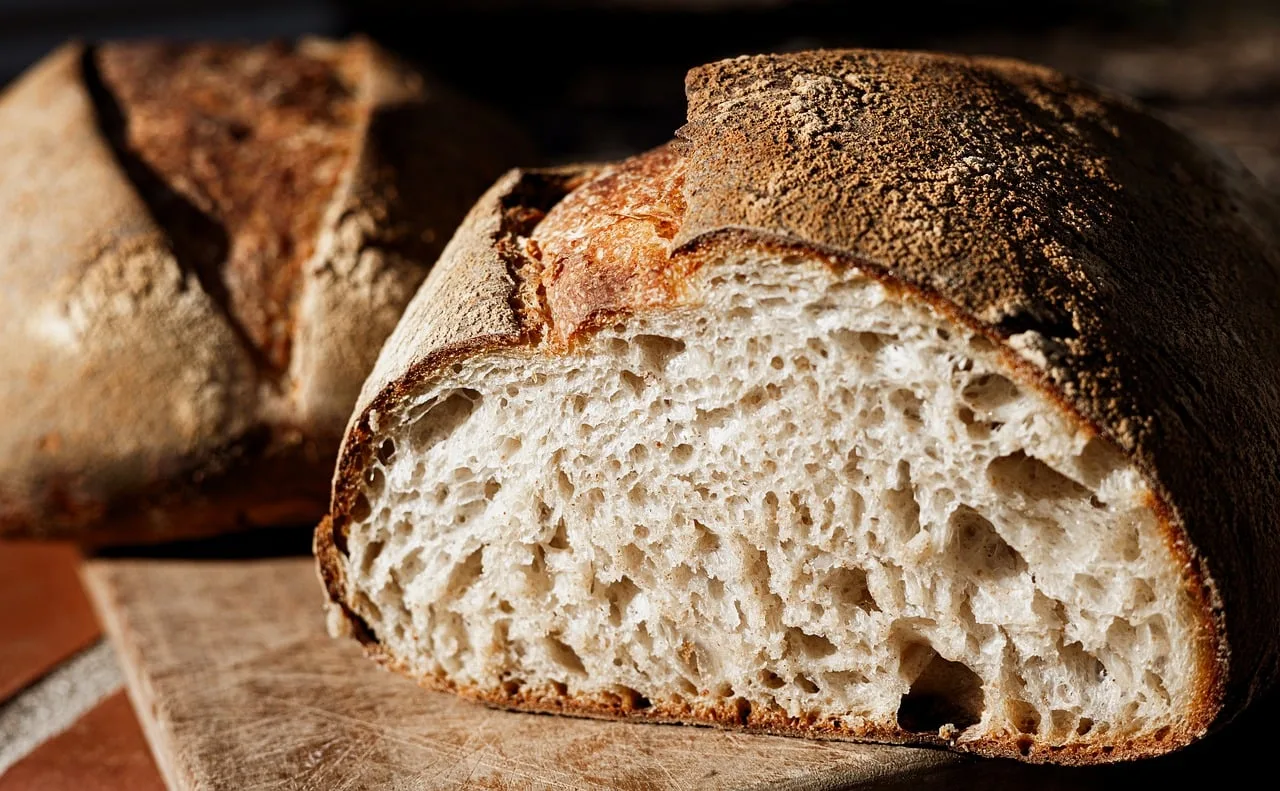
Cold retard the shaped loaves at 38F for 12 to 16 hours. Bake Saturday at 500F covered for 20 minutes, then at 450F uncovered for 20 to 25 minutes. Pull loaves at 205F to 210F internal. Cool 2 hours before bagging or slicing.
For a 20-loaf market bake, multiply every weight by 10: 10 kg flour, 7.5 kg water, 200 g salt, 2 kg starter.
What a home operation may and may not do
A cottage food permit usually covers a naturally leavened loaf with no dairy, eggs, or meat. High-moisture fillings, custards, and unbaked dough sold for later baking often require a commercial kitchen license.
State and county inspectors apply state bakery permits and inspections to your table. You may sell direct to the end consumer at a farmers market, but you may not wholesale to a grocery store or ship out of state.
The sourdough dough formula farmers market bakers use should keep the ingredient panel to flour, water, salt, and starter. That list keeps you within most cottage food definitions, but check your state's allowed ingredients.
States such as California, New York, and Texas set different gross sales caps. Some require the label to say the loaf was made in a home kitchen.
Labeling requirements for a sourdough loaf
FDA label rules apply even at a market table. A compliant label carries five fixed items. Follow the FDA food labeling and nutrition requirements for each element.
Five Required Sourdough Label Items
- Statement of identitysourdough bread
- Net weight in ounces and grams
- Ingredient listflour, water, salt, starter
- Allergen calloutwheat in bold
- Business name, street address, phone or email
| Label element | What a compliant sourdough loaf carries |
|---|---|
| Statement of identity | Sourdough bread or naturally leavened wheat bread |
| Net weight | In ounces and grams, measured on a scale checked against NIST weights and measures standards |
| Ingredient list | Flour, water, salt, and any starter carryover listed by common name |
| Allergen callout | Wheat in bold within or after the ingredient list |
| Business information | Name, street address, and phone or email of the responsible producer |
The net weight must be measured on a scale that is calibrated to national standards. The table above lists the minimum text. You can add a lot code or a use-by date, but neither replaces the five required items.
A net weight statement that is not on the loaf can be treated the same as no label at all.
Records to keep without a commercial kitchen
- Batch log with formula name, production date, and lot code
- Ingredient purchase receipts with supplier lot numbers
- Sales transaction log for the market day
- Consumer complaint log for any adverse food reports
Record your formula in baker's percentage to satisfy scale checks; see Why US Bakeries Still Use Baker's Percentage for Dough Costing. Keep these records for at least the period your state requires, often two years.
A state inspector may ask to see your batch log with the formula name, the flour lot, and the starter lot. That log should show the same formula name you use on the market sign.
Records to Keep Without Commercial Kitchen
- Batch log with formula name, date, lot code
- Ingredient purchase receipts with supplier lot numbers
- Sales transaction log for the market day
- Consumer complaint log for adverse food reports
What happens if you skip a rule
A missed allergen declaration can trigger a stop sale order from a state inspector. The inspector can require you to pull every loaf from the table that day. Your market manager can revoke your stall for the season if you cannot show current permit and labels.
A consumer who has an allergic reaction after eating unlabeled wheat bread may bring a product liability claim. That claim can survive even if you sell only at a weekend market.
If you sell in a cold state, Upper Midwest cold-climate bakery operations, seasonal demand and delivery shows why markets shorten seasons and tighten permit rules.
A stop sale order is not a warning. The inspector leaves a written notice with a deadline, and the market manager may require a copy of that notice before you return the next week.